





'%3e%3cpath%20fill='%23f4fbff'%20d='M428.028%20512c16.845%200%2030.5-13.655%2030.5-30.5V97.523H444.91c-10.443%200-18.909-8.466-18.909-18.909V28.692L411.923%202.74A30.15%2030.15%200%200%200%20399.29%200H137.173c-16.845%200-30.5%2013.655-30.5%2030.5v451c0%2016.845%2013.655%2030.5%2030.5%2030.5z'%20opacity='1'%20data-original='%23f4fbff'%20class=''%3e%3c/path%3e%3cpath%20fill='%23e4f6ff'%20d='M444.45%2097.523V481.5c0%2016.844-13.655%2030.5-30.5%2030.5h64.996c16.845%200%2030.5-13.655%2030.5-30.5V110.156c0-4.401-.951-8.703-2.74-12.633z'%20opacity='1'%20data-original='%23e4f6ff'%3e%3c/path%3e%3cpath%20fill='%23e28086'%20d='M500.513%2088.59%20420.856%208.933a30.5%2030.5%200%200%200-8.933-6.193v75.874c0%2010.443%208.466%2018.909%2018.909%2018.909h75.874a30.5%2030.5%200%200%200-6.193-8.933'%20opacity='1'%20data-original='%23e28086'%3e%3c/path%3e%3cpath%20fill='%234a80aa'%20d='m217.877%20380.093%2023.457-23.456%2049.132%2049.132-23.456%2023.456z'%20opacity='1'%20data-original='%234a80aa'%3e%3c/path%3e%3cpath%20fill='%23cc9675'%20d='m365.373%20465.827-70.242-70.242c-4.025-4.025-10.551-4.025-14.576%200L256.88%20419.26c-4.025%204.025-4.025%2010.551%200%2014.576l70.242%2070.242c10.563%2010.563%2027.688%2010.563%2038.251%200s10.562-27.688%200-38.251'%20opacity='1'%20data-original='%23cc9675'%3e%3c/path%3e%3ccircle%20cx='144.723'%20cy='283.429'%20r='142.169'%20fill='%23bed8fb'%20opacity='1'%20data-original='%23bed8fb'%3e%3c/circle%3e%3ccircle%20cx='144.723'%20cy='283.429'%20r='111.36'%20fill='%23f4fbff'%20opacity='1'%20data-original='%23f4fbff'%20class=''%3e%3c/circle%3e%3cpath%20fill='%23ffcbbe'%20d='M168.56%20335.382a5.62%205.62%200%200%201-4.92-5.548l-.108-25.684-39.242.165.108%2025.684a5.616%205.616%200%200%201-4.873%205.589s-7.246%2024.765%2024.622%2024.631c31.868-.133%2024.413-24.837%2024.413-24.837'%20opacity='1'%20data-original='%23ffcbbe'%3e%3c/path%3e%3cpath%20fill='%23407093'%20d='M202.882%20342.892c-8.991-3.958-25.966-6.462-34.321-7.511l-.05.062c-12.535%2015.68-36.357%2015.75-48.985.144-8.347%201.119-25.3%203.767-34.257%207.8-9.31%204.195-14.67%2013.359-14.864%2022.976%2042.004%2037.706%20105.767%2037.898%20147.993.574.166-10.645-5.748-19.745-15.516-24.045'%20opacity='1'%20data-original='%23407093'%3e%3c/path%3e%3cpath%20fill='%234a80aa'%20d='M174.537%20223.99c0-6.192-5.02-11.211-11.211-11.211H126.03c-14.99%200-27.142%2012.152-27.142%2027.143v20.2l9.271%207.108h72.483l9.271-15.611v-12.63c0-6.192-5.019-11.211-11.211-11.211h-.378a3.79%203.79%200%200%201-3.787-3.788'%20opacity='1'%20data-original='%234a80aa'%3e%3c/path%3e%3cpath%20fill='%23ffddce'%20d='m189.912%20251.618-17.786-1.668a35.06%2035.06%200%200%200-21.585%205.009%2035.06%2035.06%200%200%201-18.312%205.162H98.887v16.106a5.9%205.9%200%200%200%205.902%205.902c1.013%200%201.865.781%201.928%201.793%201.225%2019.751%2017.623%2035.393%2037.682%2035.393%2020.078%200%2036.487-15.67%2037.639-35.447a1.86%201.86%200%200%201%201.863-1.739h.096c3.315%200%205.996-2.688%205.974-5.995-.059-8.886-.059-24.516-.059-24.516'%20opacity='1'%20data-original='%23ffddce'%3e%3c/path%3e%3cpath%20fill='%23407093'%20d='M459.315%20208.31H326.089a7.726%207.726%200%201%201%200-15.452h133.225a7.726%207.726%200%200%201%20.001%2015.452M459.315%20254.888H326.089a7.726%207.726%200%201%201%200-15.452h133.225a7.726%207.726%200%200%201%20.001%2015.452M459.315%20301.465H326.089a7.726%207.726%200%201%201%200-15.452h133.225a7.726%207.726%200%200%201%20.001%2015.452M392.702%20348.043h-66.613a7.726%207.726%200%201%201%200-15.452h66.613a7.726%207.726%200%201%201%200%2015.452'%20opacity='1'%20data-original='%23407093'%3e%3c/path%3e%3cpath%20fill='%23ffe07d'%20d='M317.198%2097.523H163.922a8.89%208.89%200%200%201-8.891-8.891v-29.61a8.89%208.89%200%200%201%208.891-8.891h153.277a8.89%208.89%200%200%201%208.891%208.891v29.61a8.89%208.89%200%200%201-8.892%208.891'%20opacity='1'%20data-original='%23ffe07d'%20class=''%3e%3c/path%3e%3c/g%3e%3c/svg%3e)

'%3e%3cg%20fill-rule='evenodd'%20clip-rule='evenodd'%3e%3cpath%20fill='%23f6b600'%20d='M482.39%2016h-81.229v42.347h81.229l-21.174-21.173z'%20opacity='1'%20data-original='%23f6b600'%3e%3c/path%3e%3cpath%20fill='%23397399'%20d='M396.161%2016h10v346.219h-10zM152.801%20294.974l-20.236%2060.148c41.293-17.049%2075.528%2014.264%2067.431%2076.228l-31.228-.354c8.944-49.475-18.975-63.189-75.491-26.734l-27.689%2063.911H34.414l42.274-99.68%2034.135-94.09%2079.61-27.536c11.494-3.976%2018.657.745%2021.245%208.209%202.573%207.421.63%2017.724-11.214%2022.137z'%20opacity='1'%20data-original='%23397399'%3e%3c/path%3e%3cpath%20fill='%2300bfa9'%20d='M353.792%20271.778h4.947c8.922%200%2026.085%2013.547%2026.085%2022.469v73.913h-32.442V312.554c-12.793-1.345-37.83.329-46.677%2012.574l-58.416%2097.9h-33.274l82.134-144.733%201.237-36.836-61.84%2022.889c-26.588%209.841-31.481-22.03-15.179-28.473l84.609-33.436%2027.718-18.472%2068.467-75.266c4.809-5.287%2028.305%2017.766%2011.33%2036.37l-58.699%2064.335z'%20opacity='1'%20data-original='%2300bfa9'%3e%3c/path%3e%3cpath%20fill='%23c90a4f'%20d='M29.61%20463.133h136.217V496H29.61z'%20opacity='1'%20data-original='%23c90a4f'%3e%3c/path%3e%3cpath%20fill='%23fcb500'%20d='M165.827%20423.027h136.217V496H165.827z'%20opacity='1'%20data-original='%23fcb500'%3e%3c/path%3e%3cpath%20fill='%23019fce'%20d='M302.043%20362.219H438.26V496H302.043z'%20opacity='1'%20data-original='%23019fce'%3e%3c/path%3e%3ccircle%20cx='299.019'%20cy='141.335'%20r='27.942'%20fill='%2300bfa9'%20transform='rotate(-76.7%20299.109%20141.365)'%20opacity='1'%20data-original='%2300bfa9'%3e%3c/circle%3e%3ccircle%20cx='157.838'%20cy='211.89'%20r='27.942'%20fill='%23397399'%20transform='rotate(-82%20157.951%20211.966)'%20opacity='1'%20data-original='%23397399'%3e%3c/circle%3e%3cpath%20fill='%23941234'%20d='M138.521%20463.133h27.305V496h-27.305z'%20opacity='1'%20data-original='%23941234'%3e%3c/path%3e%3cpath%20fill='%23dc9602'%20d='M270.521%20423.027h31.522V496h-31.522z'%20opacity='1'%20data-original='%23dc9602'%3e%3c/path%3e%3cpath%20fill='%23397399'%20d='M401.521%20362.219h36.739V496h-36.739z'%20opacity='1'%20data-original='%23397399'%3e%3c/path%3e%3c/g%3e%3c/g%3e%3c/svg%3e)
'%3e%3cpath%20fill='%23ffd737'%20d='M300.692%20472.71c-1.292-2.617-4.082-4.16-7.001-4.16h-.216v-44.273l-37.499-21.064-37.5%2021.064v44.273h-.215c-2.919%200-5.709%201.543-7.001%204.16a7.5%207.5%200%200%200%202.222%209.343l37.999%2028.451c2.466%201.846%206.308%202.008%208.991%200l38-28.451a7.505%207.505%200%200%200%202.22-9.343'%20opacity='1'%20data-original='%23ffd737'%3e%3c/path%3e%3cpath%20fill='%23ec385f'%20d='m509.979%20385.541-28.45-38a7.5%207.5%200%200%200-13.504%204.495v.5h-151.05c-12.958%200-23.5-10.542-23.5-23.5l-31.661%2012.727s-17.031%2055.708-5.839%2064.56c16.787%2013.278%2037.985%2021.213%2061.001%2021.213h151.05v.5c0%207.035%209.286%2010.128%2013.504%204.495l28.45-38a7.5%207.5%200%200%200-.001-8.99'%20opacity='1'%20data-original='%23ec385f'%3e%3c/path%3e%3cpath%20fill='%23bee75e'%20d='M285.975%20287.536h-60a7.5%207.5%200%200%200-7.5%207.5v34c0%2012.958-10.542%2023.5-23.5%2023.5H43.925v-.5a7.5%207.5%200%200%200-13.504-4.495l-28.45%2038a7.5%207.5%200%200%200%200%208.99l28.45%2038c4.231%205.651%2013.504%202.557%2013.504-4.495v-.5h151.05c54.313%200%2098.5-44.187%2098.5-98.5v-34a7.5%207.5%200%200%200-7.5-7.5'%20opacity='1'%20data-original='%23bee75e'%3e%3c/path%3e%3cpath%20fill='%2300cb75'%20d='M285.975%20287.536h-29.999v118.783c22.826-18.055%2037.499-45.987%2037.499-77.283v-34a7.5%207.5%200%200%200-7.5-7.5'%20opacity='1'%20data-original='%2300cb75'%3e%3c/path%3e%3cpath%20fill='%23007a9f'%20d='M208.475%20195.536v97c0%208.284%206.716%2015%2015%2015h65c8.284%200%2015-6.716%2015-15v-97z'%20opacity='1'%20data-original='%23007a9f'%3e%3c/path%3e%3cpath%20fill='%2300607f'%20d='M255.975%20195.536v112h32.499c8.284%200%2015-6.716%2015-15v-97z'%20opacity='1'%20data-original='%2300607f'%3e%3c/path%3e%3cpath%20fill='%234acdf5'%20d='M272.471%2079.536H239.48c-22.646%200-41.005%2018.359-41.005%2041.005v76.995c0%208.284%206.716%2015%2015%2015h85c8.284%200%2015-6.716%2015-15V120.54c0-22.646-18.358-41.004-41.004-41.004'%20opacity='1'%20data-original='%234acdf5'%3e%3c/path%3e%3cpath%20fill='%2300abf0'%20d='M272.471%2079.536h-16.495v133h42.499c8.284%200%2015-6.716%2015-15V120.54c0-22.646-18.358-41.004-41.004-41.004'%20opacity='1'%20data-original='%2300abf0'%3e%3c/path%3e%3cpath%20fill='%23ffb048'%20d='M300.692%20472.71c-1.292-2.618-4.082-4.16-7.001-4.16h-.216v-44.273l-37.499-21.064v108.731c1.578.004%203.176-.453%204.495-1.44l38-28.451a7.504%207.504%200%200%200%202.221-9.343'%20opacity='1'%20data-original='%23ffb048'%3e%3c/path%3e%3cpath%20fill='%23ffe4c1'%20d='M255.88%200c-20.579%200-37.322%2016.743-37.322%2037.323v12.354c0%2020.58%2016.743%2037.323%2037.322%2037.323s37.323-16.743%2037.323-37.323V37.323C293.203%2016.743%20276.46%200%20255.88%200'%20opacity='1'%20data-original='%23ffe4c1'%3e%3c/path%3e%3cpath%20fill='%23fdd1a3'%20d='M255.975.002v86.996c20.536-.052%2037.228-16.773%2037.228-37.321V37.323c0-20.548-16.691-37.269-37.228-37.321'%20opacity='1'%20data-original='%23fdd1a3'%3e%3c/path%3e%3c/g%3e%3c/svg%3e)
 Certificate
British Psychological Society
Ethical guidelines for psychometric testing quality.
- Technical manual standards
- User qualification criteria
- Test security protocols
- Interpretation guidelines
Targeted thinking, confident decisions.
Measure how people think, reason, and solve problems in the workplace
Whether you are selecting talent or developing workplace capability, our cognitive psychometric tools measure the reasoning, problem-solving, and learning abilities that support recruitment and professional development.

Measure the reasoning and problem-solving abilities that contribute to learning, decision-making, and workplace performance. Support recruitment, talent identification, and employee development.
Get Started
Gain insight into your cognitive architecture, decision-making style, and problem-solving patterns. Partner with certified experts for personalised REBT coaching and data-backed microlearning frameworks.
Get StartedOur instruments examine work-relevant domains that relate to how quickly people learn new information, adapt, and solve unfamiliar problems.
BENEFITS
Pinpoint problem-solving strengths, accelerate training and onboarding success, and identify candidates with high potential for learning.
Add a scientific assessment tool to your recruitment process to accurately identify top candidates from big application pools.
Match reasoning ability and problem-solving demands to the requirements of different roles and levels of complexity.
Identify learning needs and personalise development opportunities to how people think, learn, and solve problems.
Understand the cognitive strengths across teams to support succession planning, team composition, and capability.
Add a scientific assessment tool to your recruitment process to accurately identify top candidates from big application pools.
Complete a series of timed reasoning tasks that assess aspects of cognitive ability. Your responses are scored using evidence-based psychometric methods to measure how you solve problems and process information.
Complete Cognitive Tasks
Complete a series of timed tasks designed to assess reasoning, problem-solving, memory, attention, and learning.
Your report includes
Our assessments can support organisations and individuals where reasoning, learning, and problem-solving are relevant to selection or development.
Common applications include
Accredited training in psychometrics, emotional intelligence, REBT and counselling, supported by 13+ years of applied organisational psychology.
CertificateEthical guidelines for psychometric testing quality.
 Certificate
Certified by the originating body for REBT training.

Organisational Psychologist and Founder
hello@the-innerview.com
Our team is here to help! Whether you need clarification, a specific question, or more about our services, we'd love to hear from you.
The Inner View team are experts in psychometrics. They were a pleasure to work with. They were always on time with the deadlines, delivered quality work, and gave great insights into our project, more than we expected. I would gladly work with them again. Highly recommended.
Most cognitive assessments take between 30 and 45 minutes to complete and include timed tasks. Time limits are designed to assess both accuracy and efficiency, as processing speed and effective decision-making are important aspects of workplace performance. You will receive instructions before each task so you understand what is required. We recommend completing all assessments in a quiet environment.
Our assessments were designed by an organisational psychologist using well-researched cognitive ability frameworks and open-source information from widely used instruments such as the WAIS-IV, Wonderlic Personnel Test, and Raven's Progressive Matrices. The design process also incorporates findings from academic and applied research on reasoning, problem-solving, and workplace performance.
Both individuals and organisations benefit. For instance, individuals can use the assessment to understand their cognitive strengths, identify areas for development, and make more informed decisions about learning, career direction, and professional growth. Organisations can use cognitive insights to support recruitment, talent development, training priorities, role alignment, and understanding team capability.
This assessment is still in development and is not live yet, so no results data is collected or stored through it today. When it launches, your data will be encrypted and stored securely, your results will be visible only to you unless you choose to share them, and we will follow strict data privacy protocols and never share your individual data with third parties. You will be able to request access to your data or ask for it to be deleted at any time by contacting us directly. See our Privacy Policy and our Ethical Standards and BPS Compliance page for more detail.
Organisations can use results to understand cognitive strengths within their workforce, identify learning needs, support development planning, and improve role alignment. Cognitive assessments can provide useful information about how people approach different types of problems and information demands. They should be combined with other sources of evidence, such as interviews, experience, performance data, and skills assessments, when making important workplace decisions.
Scores are reported as percentile ranks, which show how your performance compares with a relevant international sample of English-speaking working adults. Because The Inner View is a newer instrument, this comparison sample is actively growing during our current data-collection phase. Until these comparison groups expand further, we recommend using the results primarily for personal development rather than as a sole basis for high-stakes decisions.
No. Cognitive assessments should be used as one component of a broader selection process. They can provide valuable information about reasoning ability and problem-solving approaches, but they should be considered alongside interviews, work samples, skills assessments, qualifications, experience, and other relevant evidence. Organisations are responsible for ensuring their recruitment practices are fair, consistent, and compliant with UK-EU employment legislation, including the Equality Act 2010.
No. These are workplace cognitive assessments designed to understand thinking abilities relevant to professional environments. They do not diagnose intelligence, learning difficulties, ADHD, neurological conditions, or any medical or psychological condition. If you have concerns about your cognitive health or a specific condition, we recommend consulting a qualified healthcare professional.
We aim to make our cognitive assessments accessible and inclusive. If a disability, condition, or neurodevelopmental difference may affect your experience, please contact us at hello@the-innerview.com before starting the assessment. Where appropriate, we can discuss reasonable adjustments such as extra time, alternative formats, or other arrangements to support fair participation.
No specialist knowledge or preparation is required. Assessments are designed to evaluate reasoning and problem-solving ability rather than subject knowledge. However, your performance can be influenced by factors such as fatigue, distractions, stress, or unfamiliarity with testing environments. Being well rested, working somewhere quiet, and reading each question carefully will help you perform at your best. Keep in mind that tasks are timed because working speed is part of what we intend to measure. Time limits are set to be reasonable, not to catch you out. If a condition, disability, or neurodevelopmental difference affects your experience you can request adjustments such as extended time before you start. Remember that the final results are always best read alongside experience, interviews, and real job performance.
Not in the traditional sense. Instead of reducing cognitive ability to a single IQ score, our assessments purport to examine specific mental domains that are relevant to workplace performance. This provides a broader understanding of how you reason, process information, solve problems, and approach cognitive challenges. The focus is on how someone thinks through the kinds of problems a job role involves, which is more useful for development than a fixed label that claims to sum up general intelligence.
Cognitive ability is relatively stable in adulthood, but performance is not fixed. How you apply your thinking, the strategies you use, and factors such as rest, focus, and familiarity all affect assessment results on any given day. Development usually focuses less on raising a raw score and more on applying your strengths in a meaningful way, and building relevant habits for decisions and problem solving.
A lower score reflects performance on specific cognitive tasks and should not be interpreted as a measure of intelligence, potential, or personal value. Cognitive ability is only one factor influencing workplace success. Results are most meaningful when considered alongside experience, motivation, personality, emotional intelligence, other job skills, and the requirements of a specific role.
Cognitive ability measures how you reason, handle information, and solve problems. A personality assessment describes how you tend to behave and work with others, and an emotional intelligence assessment looks at how you recognise and manage emotions. They answer different questions, and many organisations use them together to build a fuller picture.
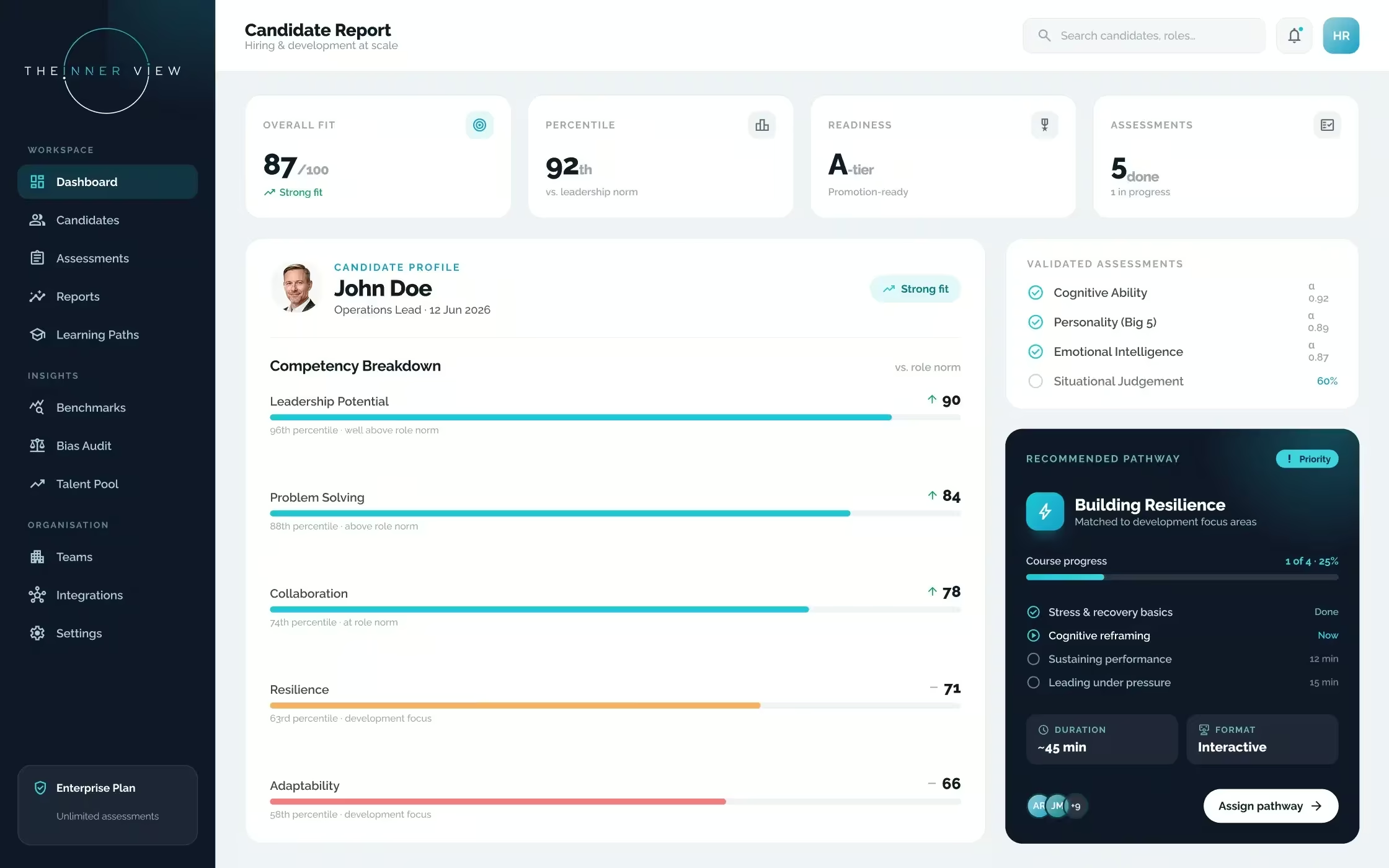
Yes. The report includes an executive summary of your overall cognitive profile, highlighting how you reason, analyse information, solve problems, and learn new concepts. It provides detailed results across each cognitive domain, explaining strengths, development opportunities, and the types of tasks where you are likely to perform most effectively. The report also explores information processing, decision-making, problem-solving, learning efficiency, and the cognitive demands of different workplace situations. Finally, it includes practical development strategies and personalised recommendations designed to strengthen reasoning, improve decision-making, and support continued professional growth.
Book a 1-to-1 coaching session with an REBT-trained coach and I/O Psychologist to explore your cognitive profile or browse our learning resources, coaching tools, and self-development materials.