

Skip to content
Watercolour illustration representing a one-to-one REBT coaching conversation that reframes limiting beliefs into empowering thoughts

Rewire your thoughts, change the outcome.

Guided by an REBT Coach
Reframe. Empower. Realign.

Rational Emotive Behavioural Coaching

Replace self-limiting beliefs with more constructive ways of thinking

Live a Fulfilling Life

Book a coaching session to identify and challenge the irrational beliefs that contribute to stress, anxiety, and avoidance, helping you develop more helpful and flexible ways of thinking.

Illustration representing emotional relief through REBT coaching showing a person in an orange top whose head is obscured by a white scribbled loop

Emotional Relief

Reduce anxiety, anger, shame, or stress by identifying and challenging beliefs that influence how you interpret situations and respond.

Illustration representing a personalised REBT coaching approach showing two hands pulling a rope taut in a game of tug-of-war, with green and blue dots on the rope

Personalised Approach

Focus each session on your goals, challenges, and personal context to develop targeted strategies and apply REBT techniques to real situations.

Illustration representing progress mapping in REBT coaching showing an upward-trending gold arrow line drawn across white tally marks on a dark background

Measurable Progress

Track changes across four core irrational beliefs and their rational alternatives to monitor shifts in thinking patterns and evaluate progress.

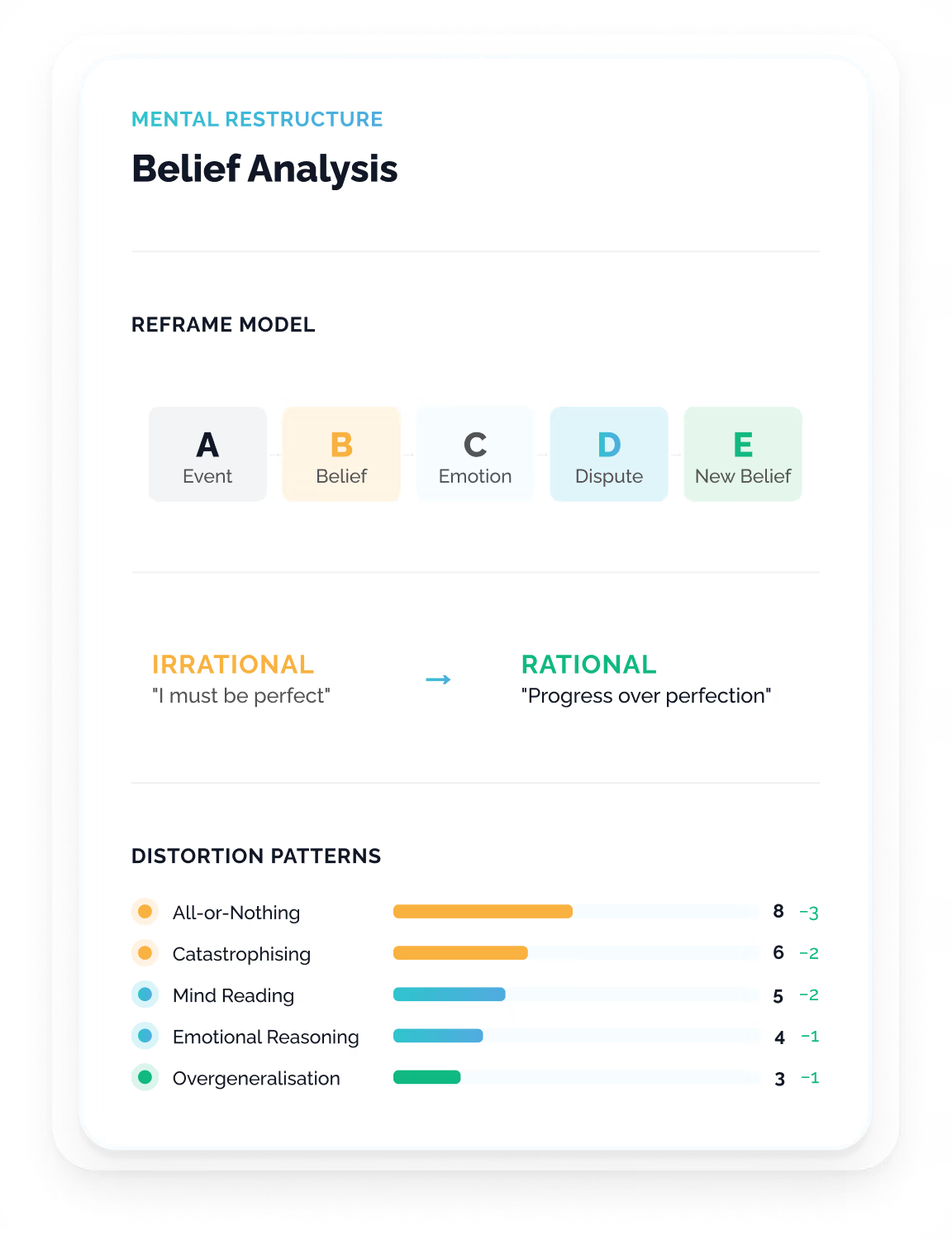
Cognitive Reframing

Identify the irrational beliefs behind your reactions, actively challenge them using evidence and logic, and develop more flexible-adaptive alternatives.

  • Understand your emotional reactions.
  • Embrace a more rational thinking.
  • Respond to setbacks with mental clarity.
Start Rethinking
Illustration of cognitive reframing in REBT coaching: challenging beliefs that drive emotional disturbance

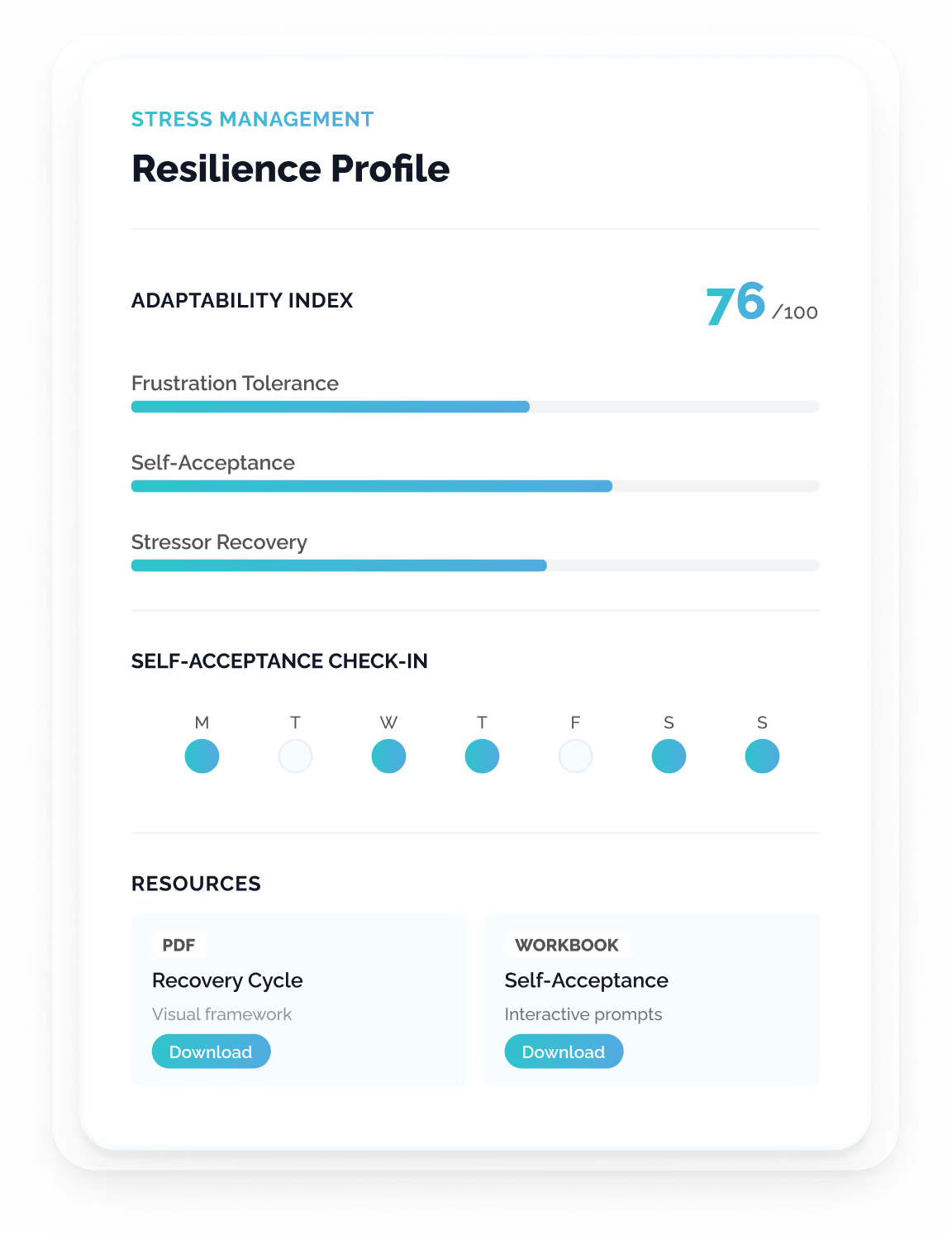
Emotional Resilience

Develop higher frustration tolerance and unconditional self-acceptance to respond to setbacks without excessive distress or self-criticism.

  • Build flexibility when facing adversity.
  • Develop unconditional self-acceptance.
  • Strengthen ability to manage stressors.
Build Resilience
Illustration of emotional resilience in REBT coaching: psychological flexibility under pressure

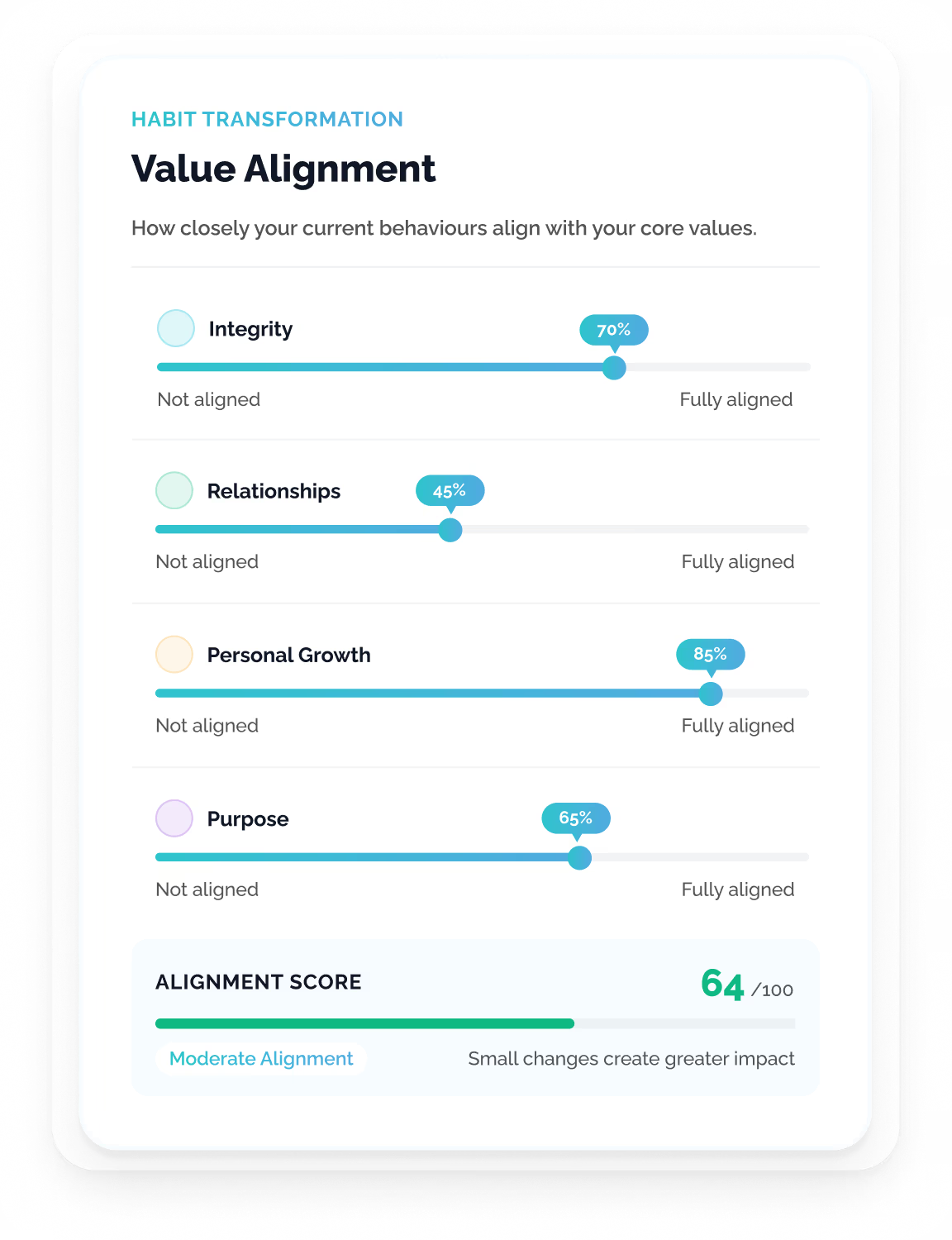
Behavioural Change

Apply rational thinking to create consistent behaviours aligned with your values and goals. Use science-driven strategies to maintain progress when motivation fluctuates.

  • Change unhelpful behavioural patterns.
  • Align behaviours with values and goals.
  • Create strategies to maintain progress.
Change Behaviour
Illustration of behavioural change in REBT coaching: building habits aligned with values and goals

Delivery

Suitable For

Available as one-to-one coaching, facilitated workshops, and tailored programmes for individuals, leaders, teams, and organisations.

Individuals

People seeking to reduce stress, build confidence, and respond constructively to personal and workplace challenges.

Teams

Teams looking to improve communication, manage conflict effectively, and build healthier ways of responding under stress.

Leaders

Managers and leaders who want to improve decision-making, emotional regulation, and their impact on the people they lead.

Organisations

Organisations investing in their employee wellbeing, leadership development, resilience, and healthier workplace cultures.

Workshops

Teams wanting practical skills through facilitated workshops built around relevant workplace challenges and group exercises.

Programmes

Longer-term development programmes designed to support sustained behavioural change across teams and organisations.

Individuals

People seeking to reduce stress, build confidence, and respond constructively to personal and workplace challenges.

Timeline

We recommend a minimum of five coaching sessions to achieve measurable change. Many clients continue beyond this to reinforce new habits and sustain progress over time.

Week 1

Session I

Identify beliefs, emotional patterns, and behaviours causing difficulty.

Week 2

Session II

Learn the REBT framework and how thoughts connect to responses.

Week 3

Session III

Challenge irrational beliefs directly against evidence, logic, and utility.

Week 4

Session IV

Replace irrational beliefs with rational, more helpful alternatives.

Week 5

Session V

Review self-help work, assess progress, and decide to continue.

Areas We Support

Typical challenges we explore during our coaching engagements.

Performance Anxiety

Irrational beliefs about failure, criticism, and self-worth that increase pressure and undermine confidence.

Stress and Burnout

Rigid beliefs and unrealistic demands that intensify pressure, overwhelm coping resources, or lead to burnout.

Low Self-Confidence

Negative beliefs about self-worth or skills that reduce confidence and limit personal and professional growth.

Anger and Frustration

Demanding expectations, low frustration tolerance, and rigid thinking that intensify reactions and strain relationships.

Task Procrastination

Avoidance of important objectives or tasks driven by perfectionism, fear of failure, self-doubt, or discomfort intolerance.

Workplace Conflict

Rigid beliefs, unrealistic expectations, and assumptions that damage communication, trust, and working relationships.

Accreditation

Our Qualifications

Accredited training in psychometrics, emotional intelligence, REBT and counselling, supported by 13+ years of applied organisational psychology.

Certificate

Primary Practicum in REBT

Certified by the originating body for REBT training.

  • Disputation of irrational beliefs.
  • Scientific frameworks.
  • Self-help toolkits.
  • Enhanced coping skills.
Certificate

Emotional Quotient Inventory

Certified in the EQ-i 2.0 measure of emotional intelligence.

  • Validated 360 EQ profiling.
  • Leadership reports.
  • Data-driven coaching.
  • Actionable insights.

Ready to Continue Your Development?

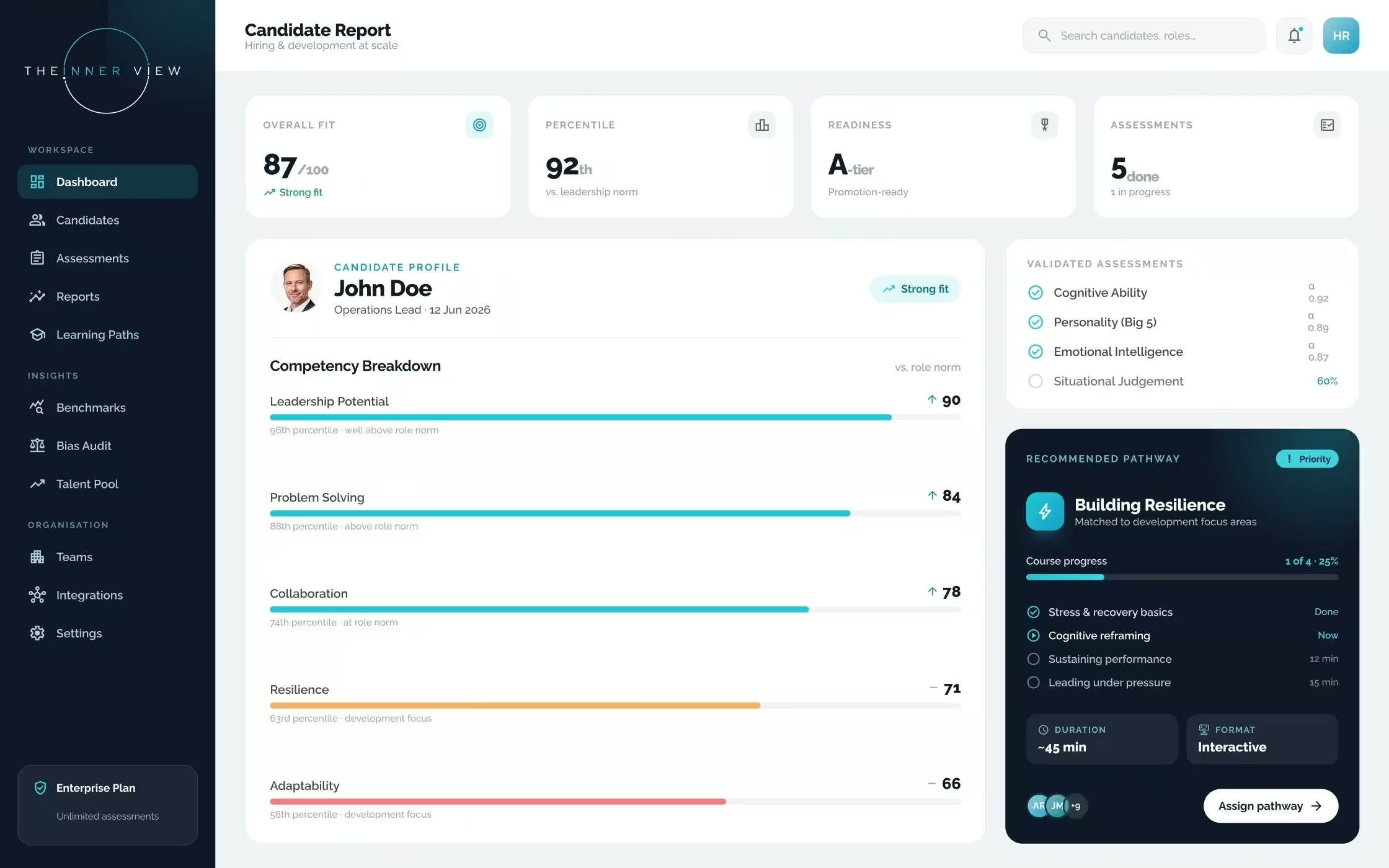
Continue applying REBT techniques between coaching sessions with structured assessments, learning resources, and progress tracking. We are building an ecosystem where you can do that. Register now to be notified when the platform launches.

  • Belief and progress assessments.
  • Self-paced learning resources.
  • Detailed progress reports.
The REBT Coaching platform showing belief and progress assessments with progress tracking between sessions
Launching soon
Cosmin Gabriel Sofron, Organisational Psychologist and Founder

Cosmin Gabriel Sofron

Organisational Psychologist and Founder

hello@the-innerview.com

Still have questions?

Our team is here to help! Whether you need clarification, a specific question, or more about our services, we'd love to hear from you.

It has been a pleasure working with you Cosmin and I enjoy observing you using your skills. I can see the development of the person-centred approach developing in your practice and in the way you see and approach the phenomenological experience of each person you work with. You have a calm and confident way of being with your clients which brings an assuredness to your work and a feeling of calm and centredness, which is so important to provide this space for your client, being an anchor for your client.

Katie GSkills & Learning AceProfileOrganisation
1 / 3

FAQ

Rational Emotive Behaviour Therapy (REBT) is an active, action-oriented approach developed by Albert Ellis as a form of cognitive behavioural therapy. It is informed by decades of research into mental and behavioural processes and focuses on how beliefs and interpretations influence emotional responses and behaviour. REBT examines whether beliefs are realistic, flexible, and helpful. Where these beliefs are rigid or unhelpful, specific techniques are used to challenge them and develop more effective alternatives. In a coaching context, REBT principles help people identify unhelpful thinking patterns, develop more flexible perspectives, and respond more constructively to workplace and personal challenges.

Traditional coaching interventions often focus on goals, actions, and accountability. In addition to including those, REBT coaching also examines the thinking patterns that can prevent progress, such as rigid expectations, fear of failure, or self-critical beliefs. This approach combines goal-focused coaching with structured techniques to challenge unhelpful thinking and develop more constructive responses.

REBT coaching is suitable for professionals at any level dealing with stress, performance anxiety, low confidence, anger, procrastination, or workplace conflict. It is equally relevant for individuals seeking personal development and for organisations investing in the wellbeing of their employees.

Individual sessions are priced at £105 per meeting and delivered through 90 minute online sessions via Google Meet, Zoom, or Microsoft Teams. We recommend a minimum of five sessions to support meaningful progress. Group and organisation programmes run three to six months and are scoped on enquiry. Click on this booking link to find a suitable date and time, and schedule your first session.

Each meeting follows a structured process: identifying the situation, examining the beliefs attached to it, disputing those beliefs against evidence and logic, and developing rational alternatives. Sessions are practical and direct. From experience, many clients notice a clear shift in thinking within the first few sessions, with more significant change consolidating over time with active practice and feedback.

Progress is tracked with structured belief assessments grounded in REBT, mapping the four core irrational beliefs (demandingness, awfulising, low frustration tolerance, and self-depreciation) against their rational counterparts. Change is visible session by session, and you receive detailed progress reports.

REBT coaching aims to help you develop more flexible thinking, respond more constructively under pressure, and reduce behaviours driven by unhelpful beliefs. Outcomes depend on your goals, engagement with the process, and the complexity of the challenges being addressed.

Yes. REBT principles are particularly relevant for leaders managing pressure, uncertainty, conflict, and difficult conversations. Coaching can help leaders recognise unhelpful thinking patterns, regulate emotional responses, and develop more effective approaches to decision-making and relationships.

Yes. We deliver coaching for individuals, teams, managers, and entire organisations. Programmes typically run for three to six months, with weekly or fortnightly sessions. Format, frequency, and focus are shaped by the organisation's goals and the complexity of issues. Programmes can be designed around leadership development, resilience, workplace stress, performance under pressure, and behavioural change.

Yes. Our REBT coaching sessions can be combined with psychometric assessments to provide additional insight into thinking styles, behavioural patterns, emotional responses, and development priorities. Assessment results can help identify areas to explore during coaching and track progress over time.

Yes. Coaching discussions and any assessment information are treated confidentially and shared only with those you explicitly authorise. Where coaching sessions are commissioned by an organisation, individual coaching content is not shared with the organisation without your explicit consent unless disclosure is required by law or there is a serious and immediate risk of harm to yourself or others. Any organisational reporting is provided only at an agreed aggregate or anonymised level where appropriate.

No. REBT coaching is a structured, goal-focused service designed for personal and professional development. It is not a clinical or therapeutic service and is not a substitute for mental health treatment. If you are experiencing a diagnosed mental health condition, we recommend consulting a qualified mental health professional.

In many cases, yes. Coaching and psychological therapy often serve different purposes, but they can meaningfully complement one another. For instance, coaching focuses on development, goals, and behavioural change rather than clinical treatment. Where appropriate, and only with your explicit consent, coaching interventions can be coordinated alongside other professional or therapetic support.

Our coaching sessions are part of an active and collaborative process. You will be expected to participate openly in discussions, complete agreed self-help exercises between sessions, and apply the techniques explored during coaching to real situations. Progress is generally significant when new ways of thinking and behaving are practised actively and consistently outside the safe space of our coaching sessions. Before coaching starts, we discuss your goals, explain how REBT coaching works, agree the scope of the engagement, outline confidentiality and its limits, and answer any questions you may have. This helps ensure our sessions are appropriate for your needs and that expectations are clear before the first session.

Your sessions and any assessment data are confidential. Where a company commissions the work, your results are not shared with your employer without consent, and any organisation reporting is at group level only. Any coaching notes and assessment information are stored securely in accordance with our data protection procedures and are accessible only to authorised personnel. We process information in line with UK GDPR and the Data Protection Act 2018. Further information is available on our Privacy page.

Our practitioners hold an MSc in Psychology of Human Resources and Organisational Health and a BSc in Cognitive-Behavioural Psychology, alongside a BSc in Economics and BA. They are trained in REBT to Primary Practicum level through the Albert Ellis Institute in New York and hold Level 3 counselling skills training accredited by the British Association for Counselling and Psychotherapy (BACP). They also hold British Psychological Society (BPS) Test User qualifications in Personality and Ability Assessment (Levels A and B) from Cambridge University, The Psychometrics Centre, and EQ-i 2.0/EQ 360 certification, and have more than 13 years of applied i/o psychology experience. We provide coaching and organisational development services only and do not offer clinical diagnosis, psychological treatment, or medical advice.

If, at any stage, it becomes apparent that your needs fall outside the scope of coaching, we will discuss this with you openly and recommend seeking support from a suitably qualified professional. Coaching is not a substitute for psychological therapy, psychiatric care, or medical treatment, and we will not continue an engagement where another form of support is more appropriate. Your safety and wellbeing take priority. Coaching is not suitable for every situation, and we will always aim to ensure the support you receive matches your needs. We do not continue coaching where clinical support is more appropriate.

The Next Step

Discuss your individual or business needs with our team, or explore our coaching tools, learning resources, and self-development materials.