
Skip to content
Illustration representing an enterprise assessment platform for hiring, development, and learning

Full talent lifecycle, one assessment ecosystem.

Designed by I/O Psychologists
Architect. Develop. Scale.

Enterprise Talent
Platform

Unified SaaS architecture consultancy for hiring, development, and learning

Ecosystems Driven by I/O Psychology

Unify the entire talent lifecycle within a cohesive platform.

We connect candidate journeys, psychometric libraries, and automated scoring directly to interactive dashboards, personalised learning, and coaching protocols.

95%Completion RatesExperience Design

Experience Design

Deploy engaging assessment journeys with interactive touchpoints designed to maximise completion rates and elevate employer brand.

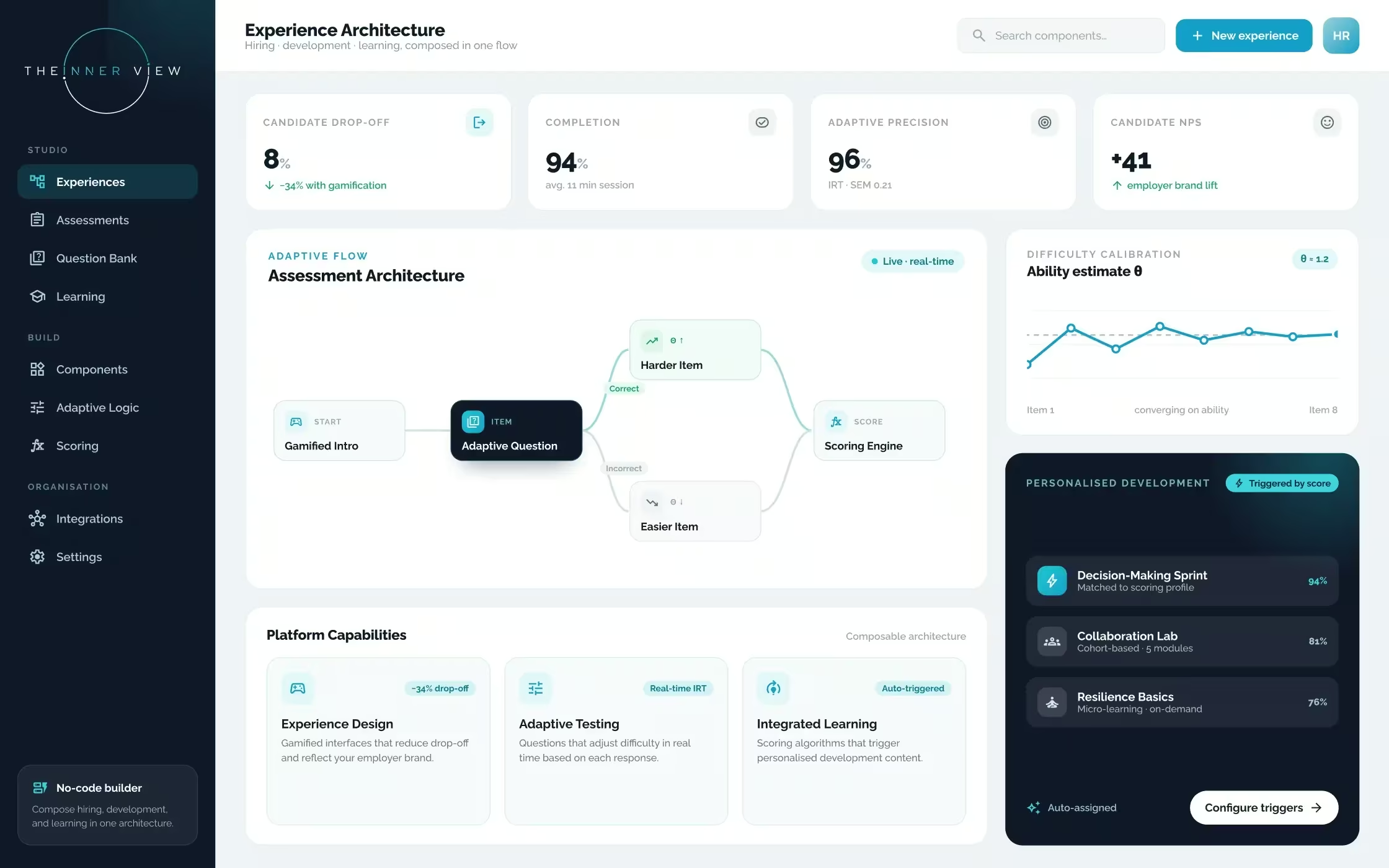
+70%Accurate assessmentsAdaptive Testing

Adaptive Testing

Add adaptive assessments that adjust question difficulty in real time, increasing measurement precision while reducing completion time.

100+Learning pathwaysIntegrated Learning

Integrated Learning

Transform assessment results into personalised development by algorithmically recommending targeted learning pathways and resources.

Platform Architecture

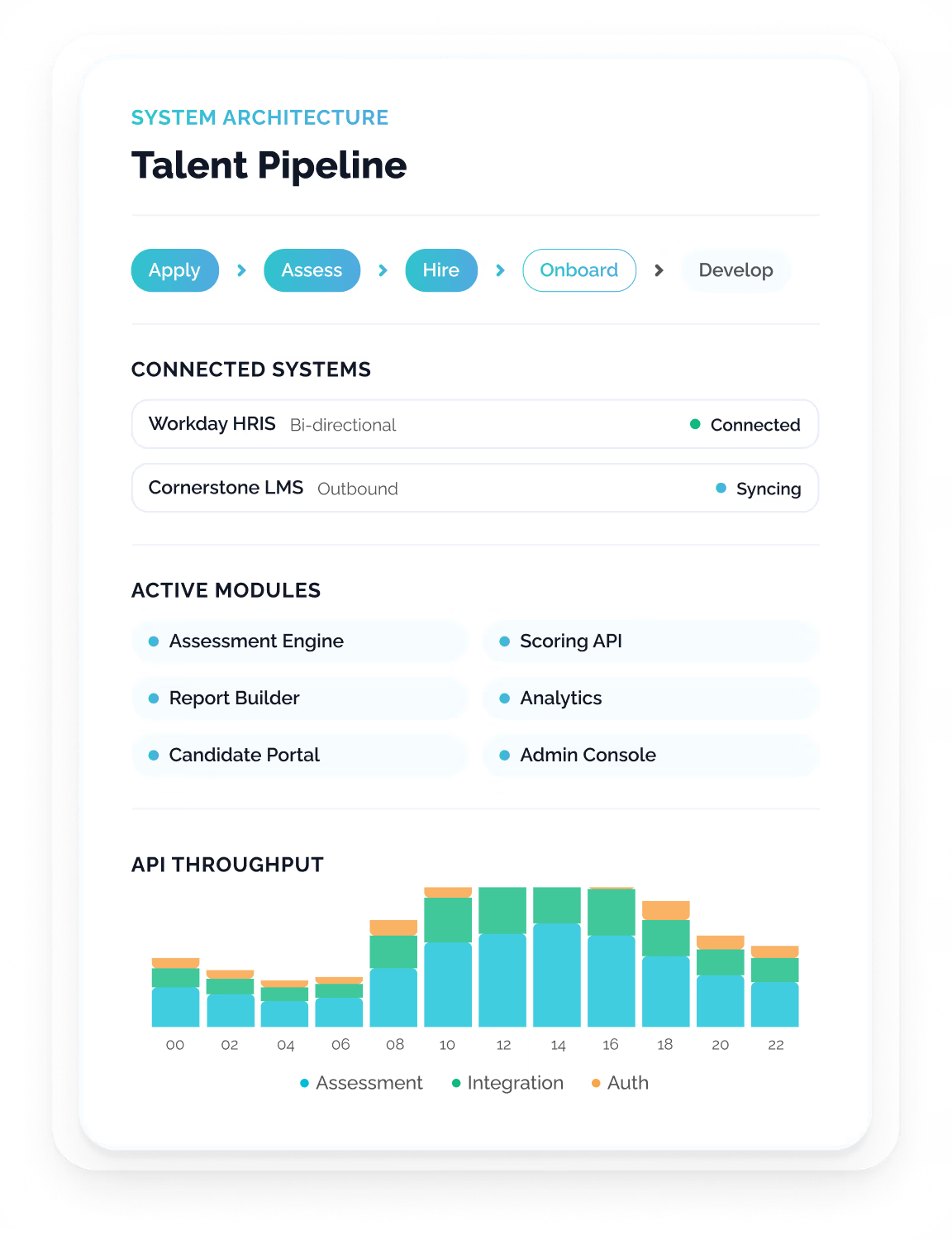
Design scalable talent assessment software platforms that support the complete candidate journey: from application and assessment to hiring, onboarding, and ongoing development.

  • Set candidate management workflows.
  • Build recruitment and talent dashboards.
  • Integrate HRIS-ATS-learning systems.
Design Platform

Assessment Development

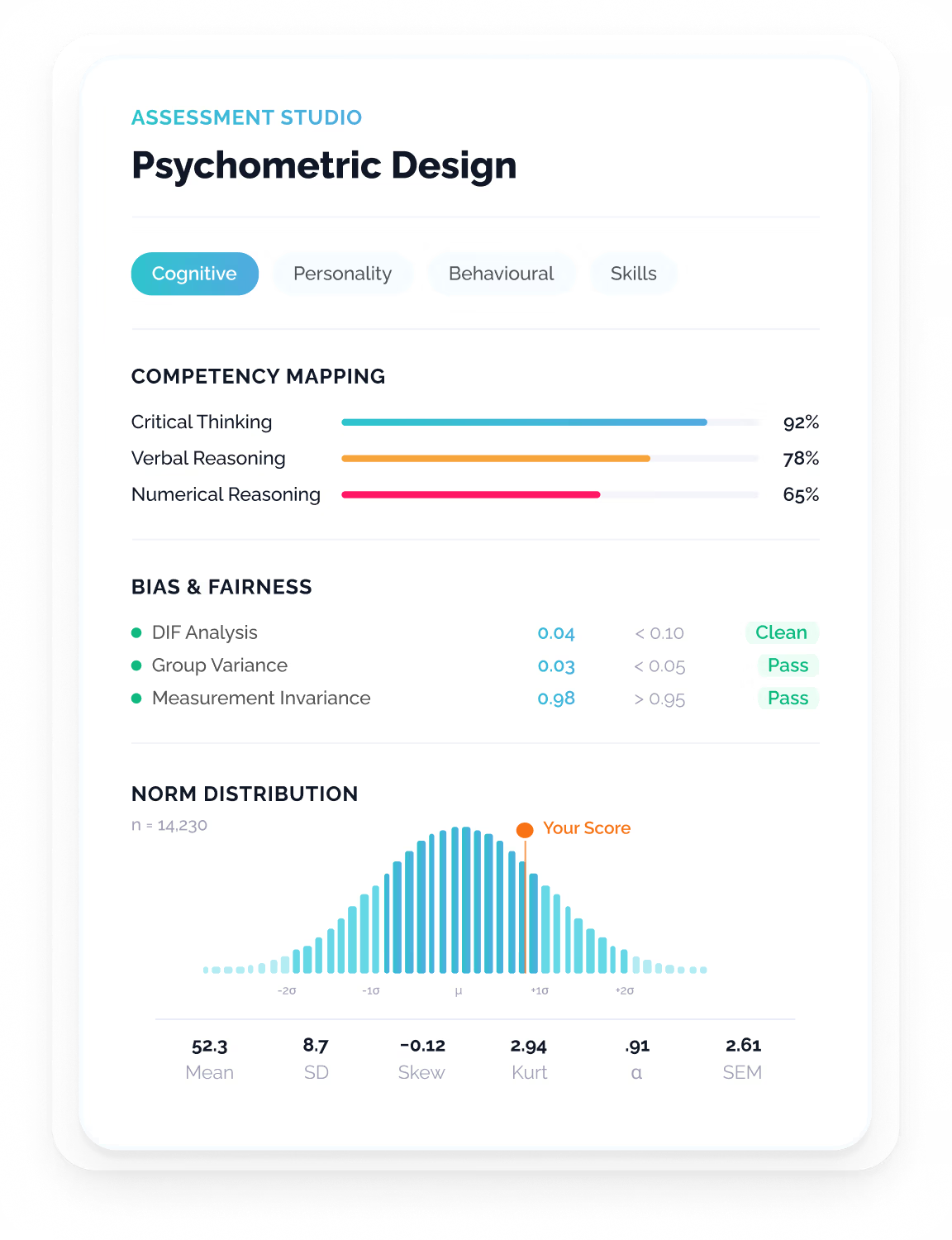
Add cognitive, personality, behavioural, and work skills assessments tailored to your roles, competency frameworks, and organisational requirements.

  • Develop role-specific assessment tools.
  • Conduct live fairness and bias analyses.
  • Keep normative benchmarks over time.
View Assessments

Learning Integration

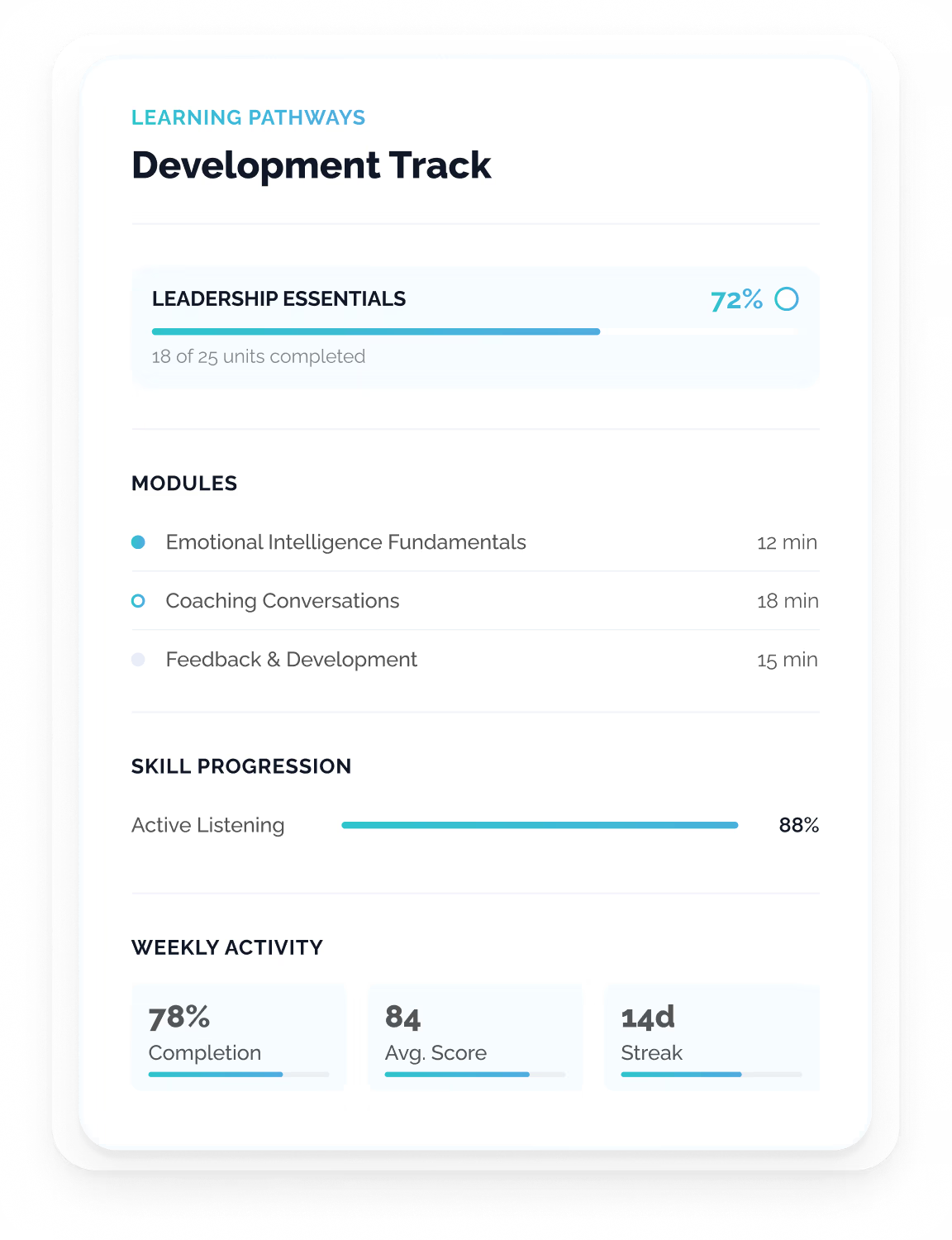
Connect assessment metrics to personalised learning tracks that support individual development, scale coaching programmes, and drive organisational learning.

  • Trigger automated learning pathways.
  • Deploy targeted micro-learning units.
  • Drive continuous workforce upskilling.
Connect Learning

Reporting & Analytics

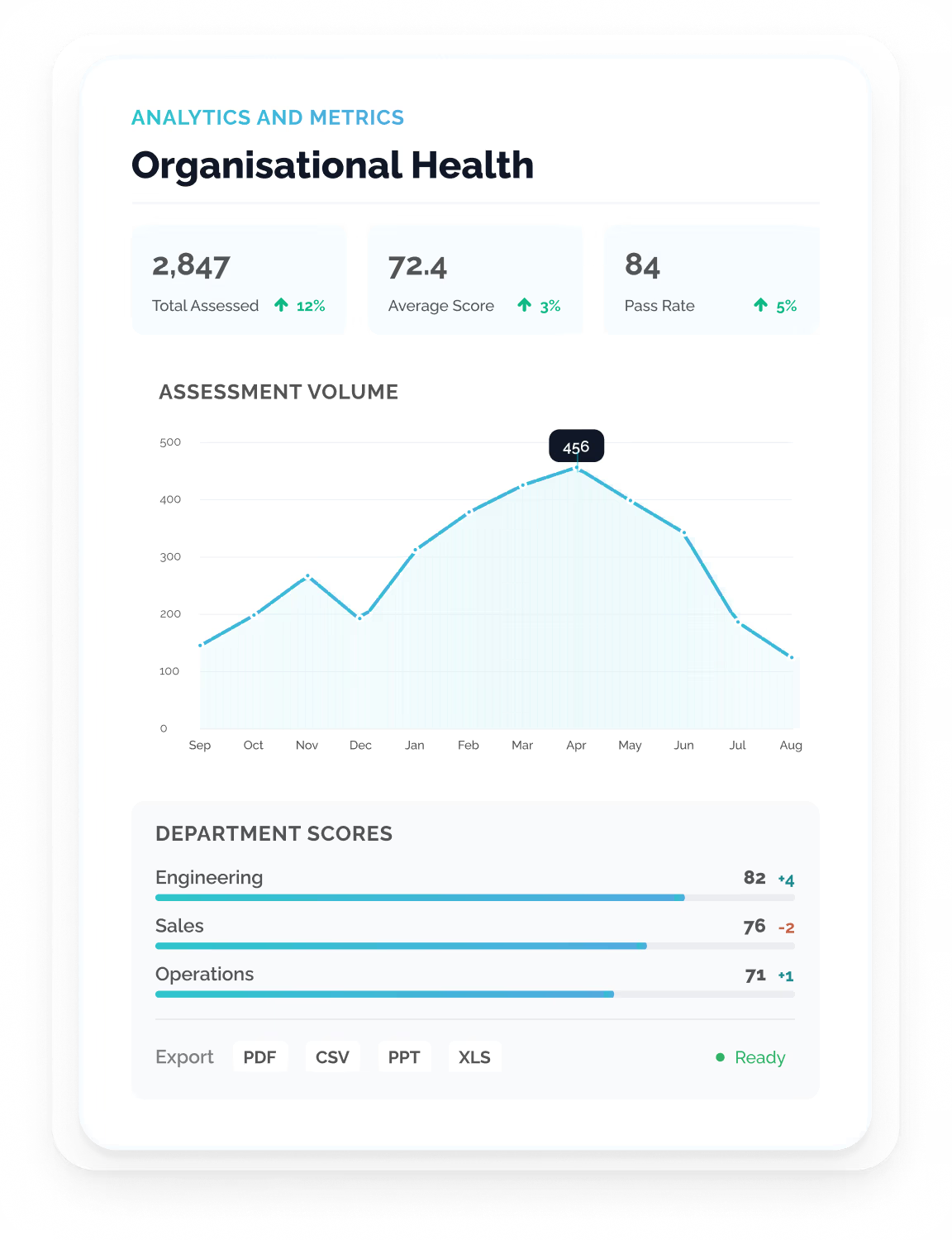
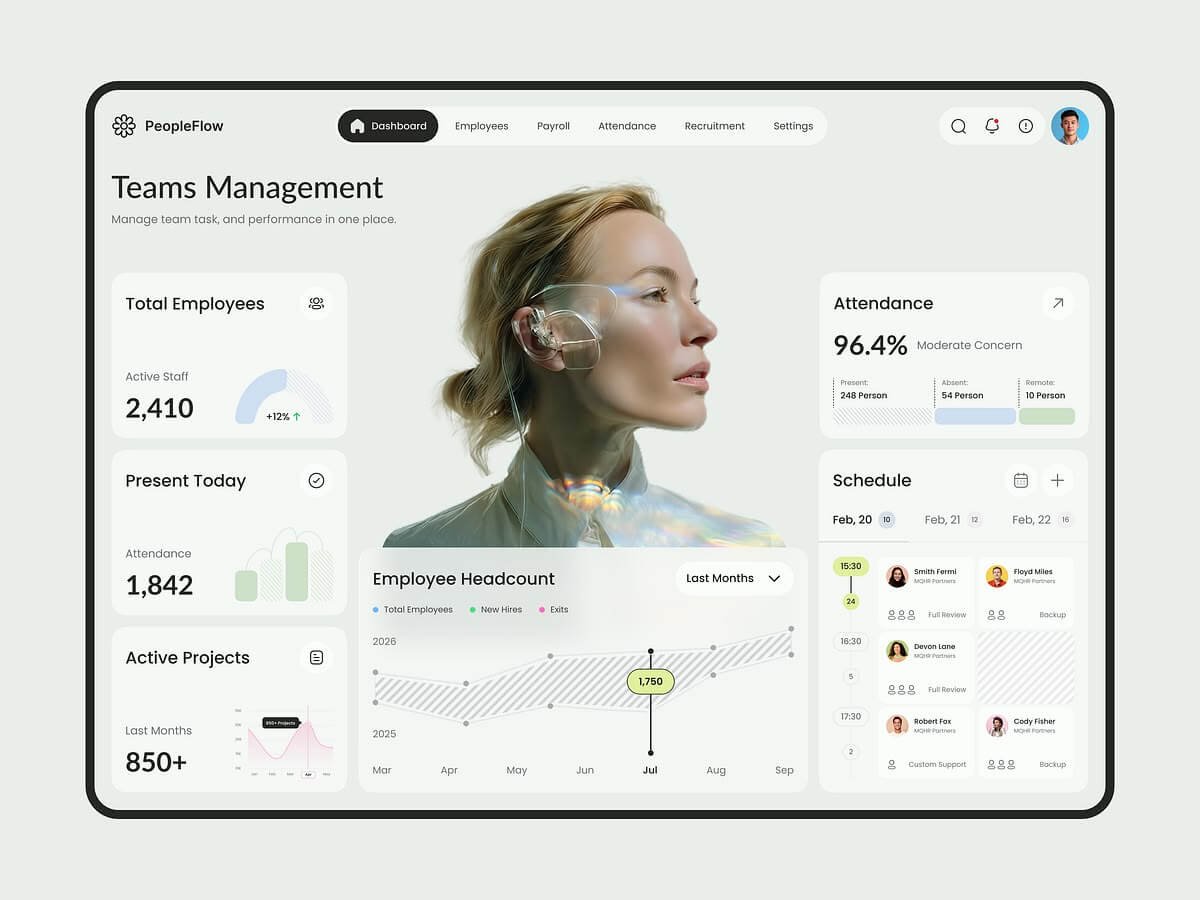
Turn assessment data into interactive dashboards and reports that support recruitment, development, and organisational decision-making.

  • Generate interactive dashboards.
  • Compare teams and candidate groups.
  • Export reports for stakeholders.
Visualise Data

Operations Hub

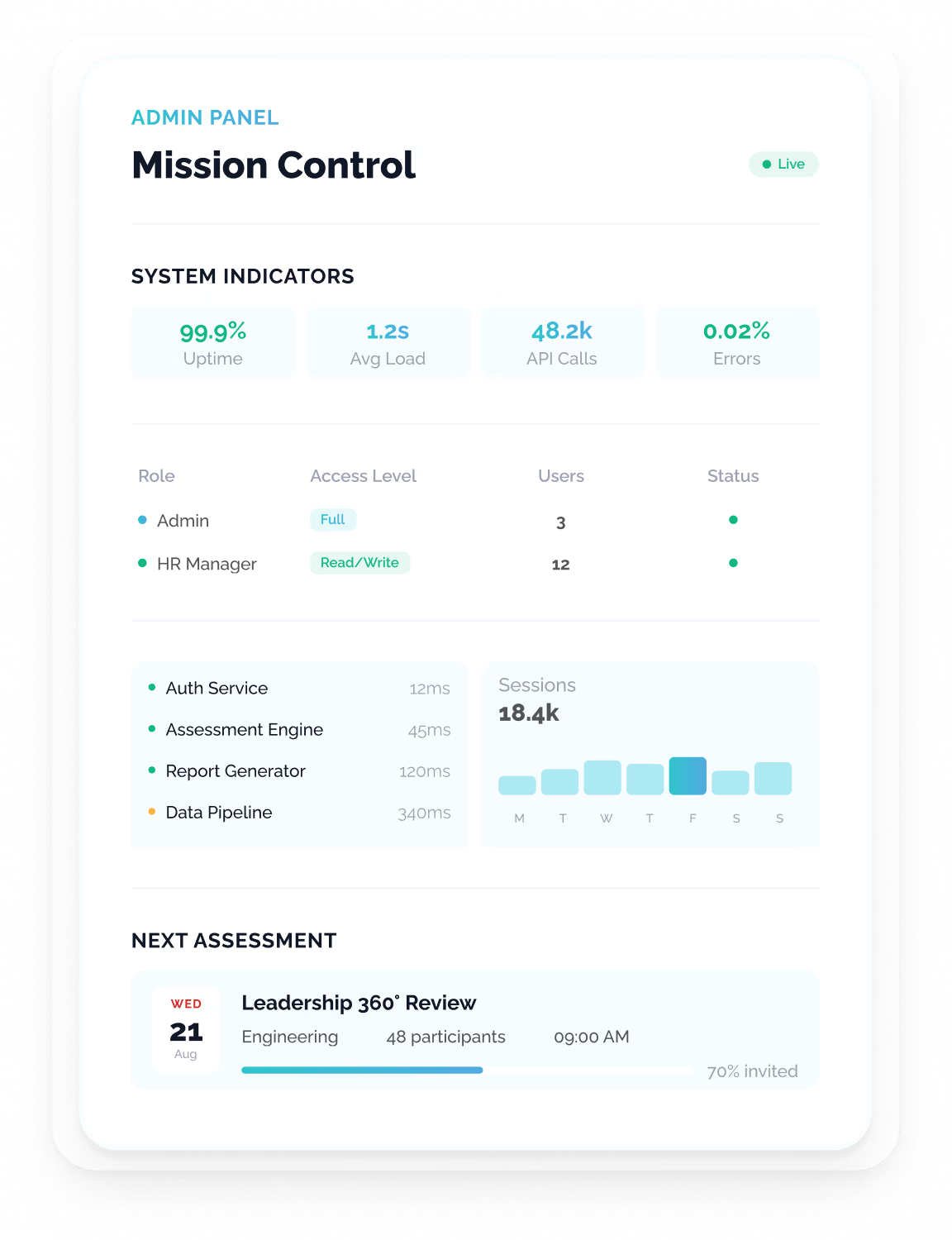
Manage users, assessments, permissions, and company settings through a secure mission control section on the platform.

  • Assign user roles and permissions.
  • Schedule assessments and invitations.
  • Monitor assessment indicators.
Build Workspace

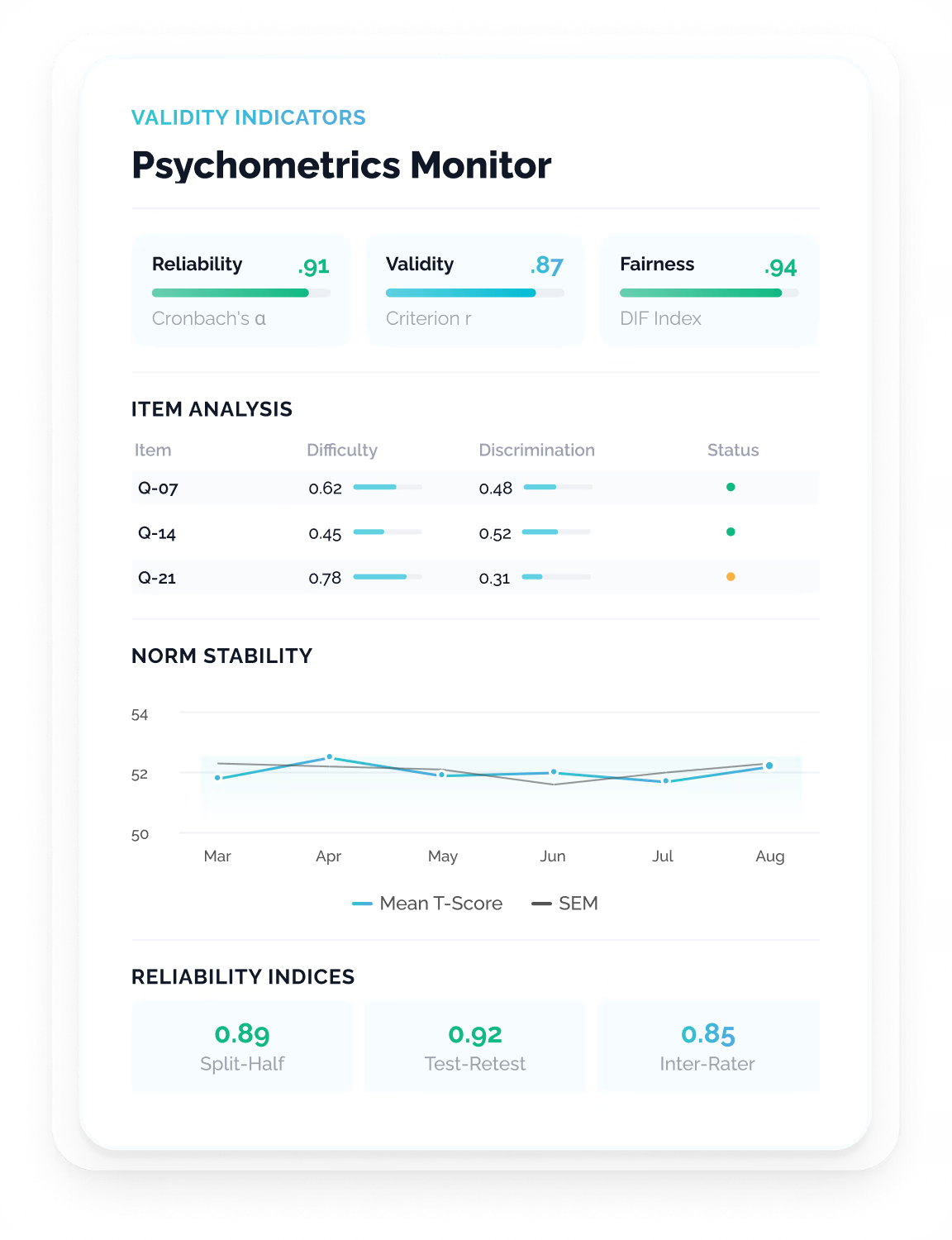
Data Health

Track assessment quality as new users complete the assessments, using advanced psychometric indicators to maintain reliable, valid, and fair measurement over time.

  • Monitor 30+ reliability and validity indices.
  • Analyse item performance.
  • Update your norms and scoring models.
Monitor Data

STRATEGIC IMPLEMENTATION

Strategic Implementation

We provide end-to-end support to integrate the platform into your HR ecosystem. Our team aligns stakeholders, validates competency frameworks, and guides change management to drive adoption.

Post-launch, we offer consultancy on psychometric recalibration.

Project Management

Minimise deployment risk with a dedicated lead managing cross-functional stakeholder alignment, milestones, and timelines.

Systemic Integration

Eliminate data silos by building robust API connections between your new talent platform and HRIS, ATS, LM systems.

Continous Optimisation

Receive consultancy updates, ongoing platform support, and psychometric recalibration to maintain accurate and reliable scoring.

Project Management

Minimise deployment risk with a dedicated lead managing cross-functional stakeholder alignment, milestones, and timelines.

Timeline

MVP platform delivery typically takes 28 to 32 weeks.

Week 1-4

Phase I

Requirements gathering, stakeholder interviews, workflow mapping, and technical specifications.

Week 5-9

Phase II

Assessment library development, test design, item writing, and psychometric validation.

Week 10-15

Phase III

Interface and dashboard design with user experience testing across recruiters, managers, and candidates.

Week 16-25

Phase IV

Backend development and system integration in coordination with your IT team or external DevOps.

Week 26-32

Phase V

Pilot testing, data validation, assessment calibration, training delivery, staged rollout, ongoing support.

Platform Features

Connect immersive candidate experiences with centralised recruitment dashboards, agentic psychometric intelligence, and automated development pathways.

Candidate Portal

Deliver branded journeys where candidates complete assessments securely, track progress in real time, and receive automated performance feedback.

Recruiter Dashboard

Centralise talent pipelines into a high-visibility interface, aggregate psychometric scores, and view automated hiring recommendations across job roles.

Assessment Builder

Create and administer bespoke assessment tools, configure scoring models, define strict time parameters, and add computer-adaptive testing logic.

Automated Reporting

Generate individual profiles and cross-candidate summaries. Convert raw data into psychometric insights, developmental advice, and interview guides for managers.

Learning Pathways

Trigger personalised development tracks based on assessment results. Map outputs to skill gaps, deploying micro-learning modules and coaching resources.

Analytics Suite

Assess long-term talent acquisition, onboarding velocity, and quality-of-hire metrics. Track trends, isolate talent pipeline friction, and visualise benchmarks.

Join our enterprise early access programme

Deliver bespoke assessments, pull automated candidate reports, and deploy learning pathways. Our platform is launching soon. We are accepting a limited number of enterprise partners ahead of release.

  • Use assessments for recruitment.
  • Generate candidate profile reports.
  • Assign coaching interventions.
The Enterprise Talent Platform showing a candidate recruitment report with assessment scores and recommended interventions
Launching soon
Cosmin Gabriel Sofron, Organisational Psychologist and Founder

Cosmin Gabriel Sofron

Organisational Psychologist and Founder

hello@the-innerview.com

Still have questions?

Our team is here to help! Whether you need clarification, a specific question, or more about our services, we'd love to hear from you.

Cosmin was an absolute pleasure to work with. His communication was outstanding, and he was consistently responsive and professional throughout the entire project. His expertise and depth of knowledge in his field were immediately apparent, and he provided invaluable insights that significantly improved the final outcome. I highly recommend Cosmin and would gladly collaborate with him again on future projects. He is a true expert.

VitaliyFounder & CTOProfile
1 / 3

FAQ

Yes. Every platform deployment is engineered as a customised solution rather than an off-the-shelf. The architectural design protocol starts with a diagnostic discovery phase to map organisational context, user personas, and specific executive decision-making mandates. Every layer of the ecosystem is then custom-configured, including proprietary psychometric batteries, automated scoring algorithms, benchmark norms, reporting dashboards, and end-to-end candidate and administrator user journeys.

The platform ecosystem can support a wide range of diagnostic tools, including personality assessments, cognitive ability tests, job-skills, emotional intelligence measures, leadership style indicators, 360-degree feedback loops, and organisational cultural fit metrics. Custom psychometric instruments can also be scientifically created and validated to align with specific competency frameworks.

Assessments are grounded in organisational psychology, psychometric theory, and behavioural science. The end-to-end development lifecycle could include a job analysis, construct definition, psychometric item generation, pilot testing, cognitive interviews, item analysis (including discrimination and difficulty indexing), reliability analysis (internal consistency and test-retest), and ongoing criterion-related and construct validity analysis. The level of rigour is aligned with the intended use of the platform.

Yes. System integration is executed under strict technical governance protocols in direct collaboration with your internal IT, cybersecurity, and engineering teams. The infrastructure is built for interoperability across modern HR tech stacks, facilitating secure data transfer with enterprise Applicant Tracking Systems (ATS), Human Resource Information Systems (HRIS), Learning Experience Platforms (LXP), and custom proprietary data warehouses via robust RESTful APIs, webhooks, and secure data sync pipelines.

Yes. Workflow orchestration, candidate assessment sequences, automated stage-gates, reporting structures, scoring configurations, and learning pipelines are fully modular. The entire operational engine is created to replicate specific talent acquisition, internal mobility, or talent management blueprints. This ensures the final platform reinforces existing organisational ways of working while remaining sufficiently agile to undergo recalibration as business priorities and talent strategies evolve over time.

Assessment results are programmatically mapped to target developmental needs and skill gaps. Upon completion of an assessment, the algorithmic engine triggers hyper-personalised development pathways, dynamically serving coursework, behavioural micro-learning modules, or leadership coaching protocols. These recommendations continuously iterate in real time, updating dynamically as the individual completes learning milestones, tracks behavioural goals, or undergoes future evaluations..

Computer Adaptive Testing (CAT) leverages Item Response Theory (IRT) to adjust question selection in real time based on the accuracy of the candidate's preceding answers. By dynamically tailoring the assessment to the individual's true ability level, the tools on the platform could significantly increase measurement precision. This is particularly important at extreme high and low performance thresholds. At the same time, adding this technology reduces total test length. It also creates a high-completion, low-friction user experience without sacrificing psychometric validity, reliability, or data integrity

The platform architecture can be designed to unify the entire talent lifecycle within a single data ecosystem. This structure may enable organisations to transition candidate selection data into onboarding workflows, high-potential identification matrices, leadership development programmes, succession planning models, and learning tracking, maximising the long-term utility of the initial talent data captured.

Organisations retain the intellectual and legal ownership over all proprietary assessment data, candidate profiles, and talent analytics collected on their platform. The infrastructure enforces data minimisation principles, granular user access permissions, and strict compliance with global data protection frameworks, enabling enterprises to securely export, analyse, and leverage their data responsibly.

Talent insights are delivered through a multi-tiered reporting architecture. This features real-time interactive analytics dashboards, individual assessment profiles, and cross-candidate comparative matrices. Reporting layers are specifically configured to translate psychometric results, behavioural indicators, and data trends into highly accessible summaries. The final reporting highlights strengths, development risks, and specific behavioural interview questions for business leaders.

We intend to build the platform architecture to meet rigorous enterprise-grade cybersecurity and data compliance standards. We pay attention to UK-EU GDPR and CCPA data privacy frameworks, data encryption protocols both at rest (AES-256) and in transit (TLS 1.3), automated data retention policies, and granular Role-Based Access Control (RBAC). This ensures that highly sensitive candidate psychometric and demographic data remains accessible solely to authorised HR and verified system administrators. This platform is still in development; full details of how candidate data is handled will be provided in our Privacy Policy when it launches.

For deployments leveraging algorithmic evaluation or agentic AI workflows, continuous statistical monitoring, differential item functioning (DIF) analyses, and regular demographic parity audits are conducted. These are performed to actively detect, isolate, and mitigate systemic algorithmic bias. We also add multi-layered safeguards directly into the assessment architecture. To prevent item exposure and plagiarism, we can build extensive parallel item banks that support dynamic, randomised question delivery alongside strict micro-timing constraints. Furthermore, assessment items can be created to resist generative AI exploitation by focusing on contextual, multi-stage, or adaptive reasoning rather than rote knowledge retrieval. Post-administration, we can deploy advanced statistical data forensics and agentic psychometric intelligence to analyse response string vectors, identifying and filtering out fraudulent patterns, bot-like behaviours, and careless or random responing to ensure significant data integrity.

Technical implementation follows a structured, full-service project governance framework. A dedicated consulting delivery lead coordinates directly with internal corporate IT, information security, and HR stakeholders. This governance covers the end-to-end deployment lifecycle, managing API mapping, single sign-on (SSO) configuration, white-label environment styling, and historical talent data migration, ensuring an operational launch with minimal disruption to active business workflows.

The Next Step

Discuss your project requirements with our team or browse our learning resources, coaching tools, and self-development materials.